

1. Introduction
Artificial Intelligence (AI) is rapidly transforming waste management systems worldwide. In the context of e-waste management, AI offers powerful solutions to address challenges such as inefficient collection, low recycling rates, complex material composition, and environmental risks. As global e-waste generation continues to rise, AI-driven technologies are emerging as a critical tool for making recycling smarter, faster, safer, and more sustainable.
2. Why AI is Needed in E-Waste Management
Traditional e-waste management systems face multiple limitations:
- Manual sorting is slow, unsafe, and inaccurate
- Complex electronic components are difficult to separate
- High labor costs reduce recycling efficiency
- Informal recycling causes environmental and health damage
AI enables automation, data-driven decision-making, and real-time monitoring, significantly improving overall system performance.
3. Key Applications of AI in E-Waste Management
3.1 AI-Powered Waste Identification & Sorting
- Computer vision systems identify electronic devices and components
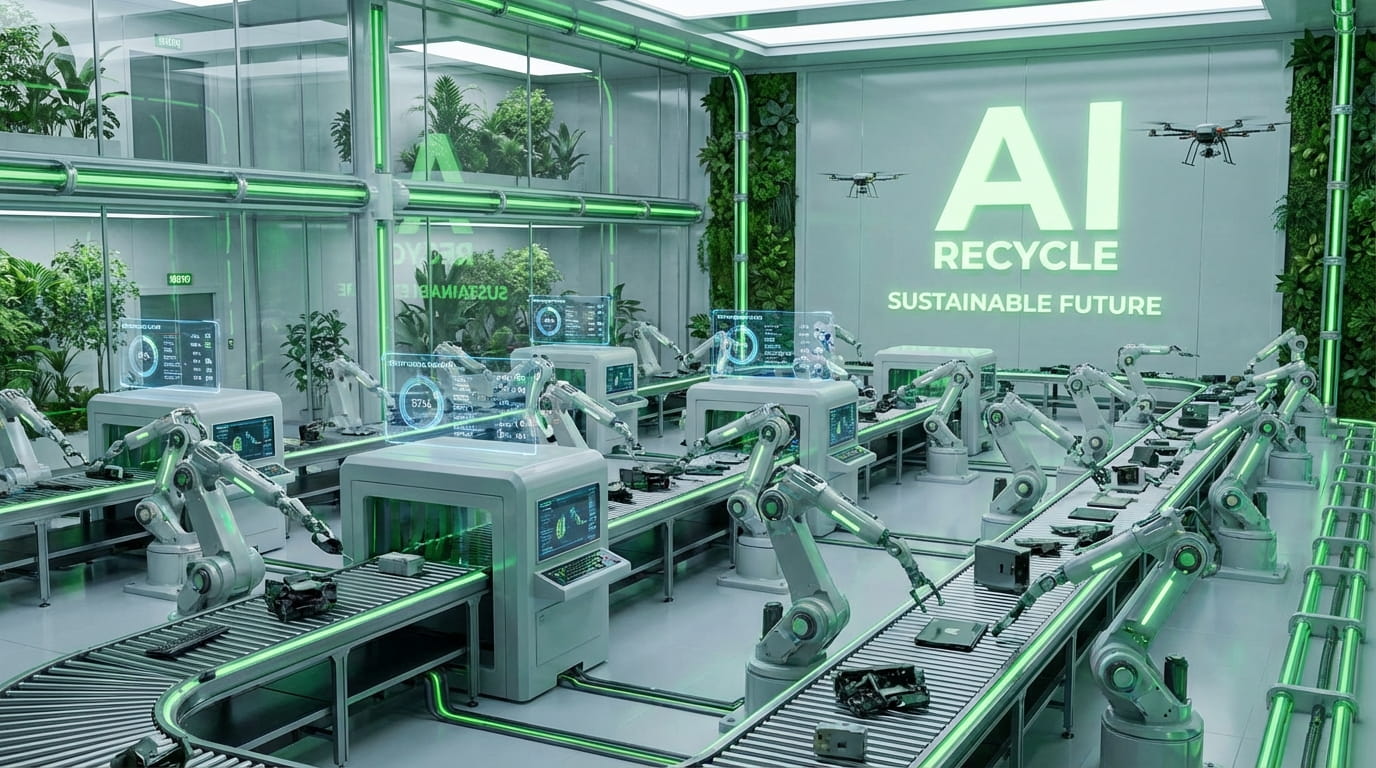
- AI-enabled robots separate plastics, metals, circuit boards, and batteries
- Machine learning models improve accuracy over time
Benefits:
- Faster processing
- Higher material purity
- Reduced human exposure to toxic substances
3.2 Smart Recycling Facilities
AI-driven recycling plants use sensors, robotics, and analytics to:
- Optimize dismantling processes
- Automatically detect hazardous materials
- Maximize recovery of valuable metals
These systems reduce waste leakage and increase recycling efficiency.
3.3 Predictive Analytics for E-Waste Generation
AI analyzes consumption patterns, sales data, and product lifecycles to:
- Predict future e-waste volumes
- Plan recycling capacity
- Improve logistics and infrastructure planning
This helps governments and recyclers prepare for future demand.
3.4 Intelligent Collection & Logistics
- AI-based route optimization reduces fuel use and emissions
- Smart bins with sensors monitor fill levels
- Automated scheduling improves collection efficiency
These systems reduce operational costs and carbon footprint.
3.5 Material Recovery & Resource Optimization
AI models optimize the extraction of:
- Copper, aluminum, gold, silver
- Rare earth elements
Higher recovery rates reduce dependence on mining and support circular economy goals.
3.6 Monitoring & Compliance
- AI tracks e-waste flows across supply chains
- Detects illegal dumping and unregulated exports
- Supports regulatory enforcement and reporting
This improves transparency and accountability.
4. AI and the Circular Economy
AI plays a key role in enabling a circular economy by:
- Extending product lifespans through predictive maintenance
- Supporting reuse and refurbishment decisions
- Improving eco-design through data feedback loops
This shifts the system from “use-and-dispose” to “reuse-and-recover”.
5. Benefits of AI in E-Waste Recycling
Environmental Benefits
- Reduced landfill dumping
- Lower pollution and emissions
- Improved resource conservation
Economic Benefits
- Higher recovery of valuable materials
- Lower operational costs
- Creation of skilled green jobs
Social Benefits
- Safer working conditions
- Reduced informal recycling hazards
- Better public participation through smart systems
6. Challenges & Limitations
Despite its potential, AI adoption faces challenges:
- High initial investment costs
- Limited access to data in developing regions
- Need for skilled workforce
- Integration with existing waste systems
Ethical and data privacy concerns also require careful management.
7. Future Outlook
The future of AI in e-waste management includes:
- Fully automated recycling plants
- AI-designed recyclable electronics
- Blockchain + AI for end-to-end traceability
- Global data platforms for e-waste monitoring
As technology advances, AI will become a core pillar of sustainable e-waste management.
8. Conclusion
AI represents the future of e-waste management and recycling. By enabling smarter sorting, efficient recovery, predictive planning, and transparent monitoring, AI can transform e-waste from a growing environmental threat into a valuable resource stream. The integration of AI with strong policy and public participation is essential to achieve sustainable and circular e-waste systems.
(End of Document)




Leave a Reply