

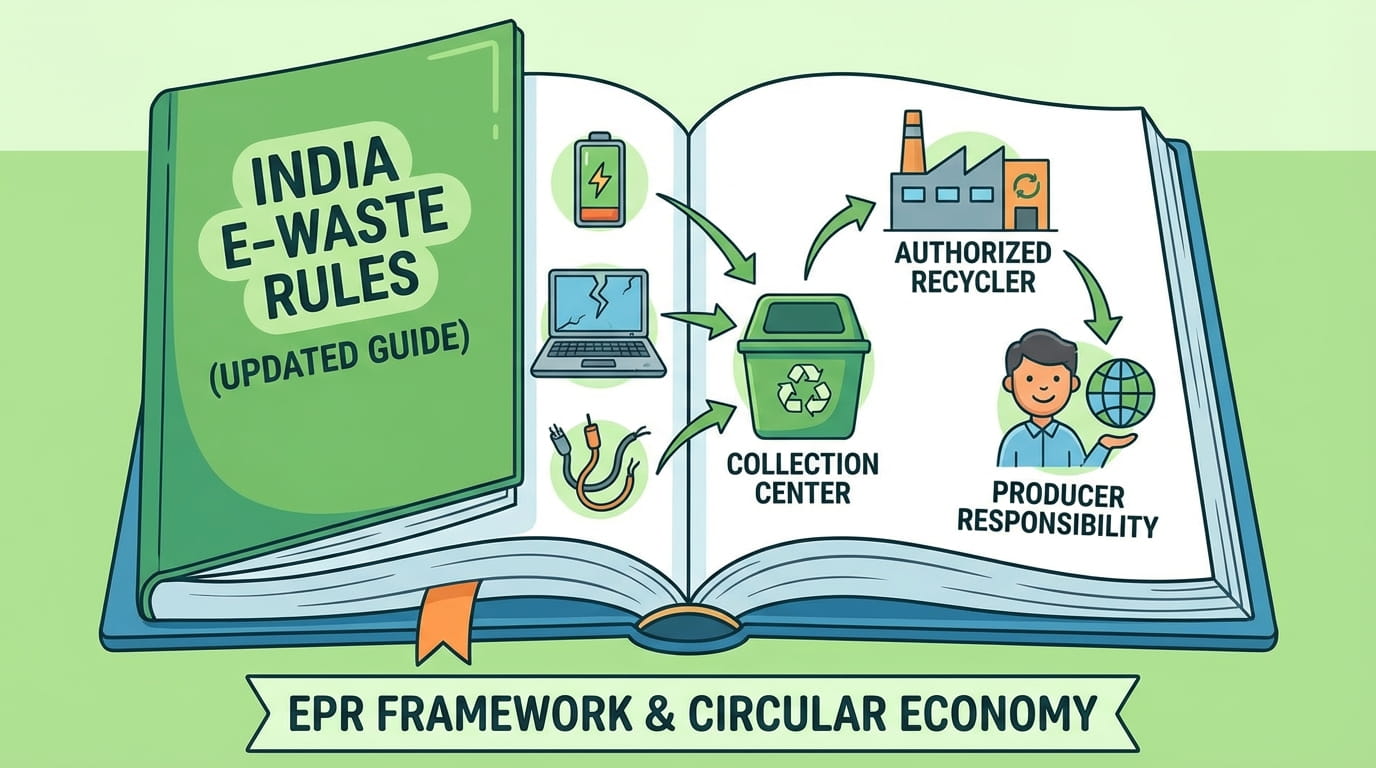
With the rapid growth of electronic devices in India, managing electronic waste has become a serious environmental and legal concern. To address this issue, the Government of India introduced the E-Waste (Management) Rules, 2022, which came into effect on 1 April 2023, replacing the earlier 2016 rules.
This updated guide explains the current government rules and the responsibilities of companies under India’s e-waste management framework.
What Are E-Waste Management Rules?
The E-Waste Management Rules are government regulations designed to ensure safe, scientific, and environmentally responsible handling of electronic waste. These rules apply to electrical and electronic equipment (EEE) such as:
- Mobile phones and accessories
- Laptops, computers, and servers
- Televisions and monitors
- Home appliances like refrigerators, washing machines, and air conditioners
- IT and communication equipment
The rules aim to reduce pollution, protect human health, and promote recycling of valuable resources.
E-Waste Management Rules 2022 – Key Highlights
The updated rules introduced several important changes:
- Replacement of E-Waste Management Rules, 2016
- Mandatory Extended Producer Responsibility (EPR)
- Online registration through the CPCB portal
- Higher recycling and collection targets
- Increased accountability and transparency
These changes strengthen India’s formal e-waste recycling system.
Extended Producer Responsibility (EPR)
Extended Producer Responsibility is the core of the new e-waste rules. Under EPR:
- Producers are responsible for collecting and recycling e-waste generated from their products
- Responsibility continues even after the product reaches end-of-life
- Producers must meet annual recycling targets
- Recycling must be done only through authorized recyclers
EPR ensures that companies take responsibility for the full lifecycle of their electronic products.
Responsibilities of Companies Under E-Waste Rules
Companies involved in manufacturing, selling, or using electronic products have clear responsibilities:
1. Registration with CPCB
All producers, manufacturers, recyclers, refurbishers, and dismantlers must register on the Central Pollution Control Board (CPCB) online portal.
2. Collection and Recycling of E-Waste
Companies must ensure proper collection of e-waste through take-back systems or authorized collection agencies.
3. Meeting Recycling Targets
Producers must achieve yearly recycling targets as prescribed under EPR guidelines.
4. Use of Authorized Recyclers
E-waste must only be handed over to government-approved and registered recyclers.
5. Record Keeping and Reporting
Companies are required to maintain records and submit returns related to e-waste collection and recycling.
6. Consumer Awareness
Producers must inform consumers about safe disposal methods and available e-waste collection options.
Role of Bulk Consumers
Bulk consumers such as offices, corporate organizations, institutions, and government bodies must:
- Ensure e-waste is handed over only to authorized collectors or recyclers
- Avoid selling e-waste to informal or unauthorized dealers
The updated rules have simplified compliance for bulk consumers while maintaining accountability.
Penalties for Non-Compliance
Failure to comply with e-waste management rules can result in:
- Environmental compensation
- Monetary penalties
- Cancellation of registration
- Legal action by regulatory authorities
Strict enforcement encourages companies to follow responsible recycling practices.
How Greentick Waste Management Helps in Compliance
Greentick Waste Management (GWM) supports individuals and businesses in complying with India’s e-waste rules by:
- Providing authorized e-waste collection services
- Ensuring safe handling and transportation
- Connecting e-waste to registered recyclers
- Supporting companies in responsible disposal
Partnering with an authorized service provider makes compliance easy and stress-free.
Conclusion
India’s updated E-Waste Management Rules place strong responsibility on companies to manage electronic waste responsibly. By following EPR guidelines and working with authorized recyclers, businesses can protect the environment while staying legally compliant.
Responsible e-waste management is not just a legal obligation—it is a step toward a sustainable future.
Dispose responsibly. Choose authorized e-waste management solutions.



Leave a Reply