

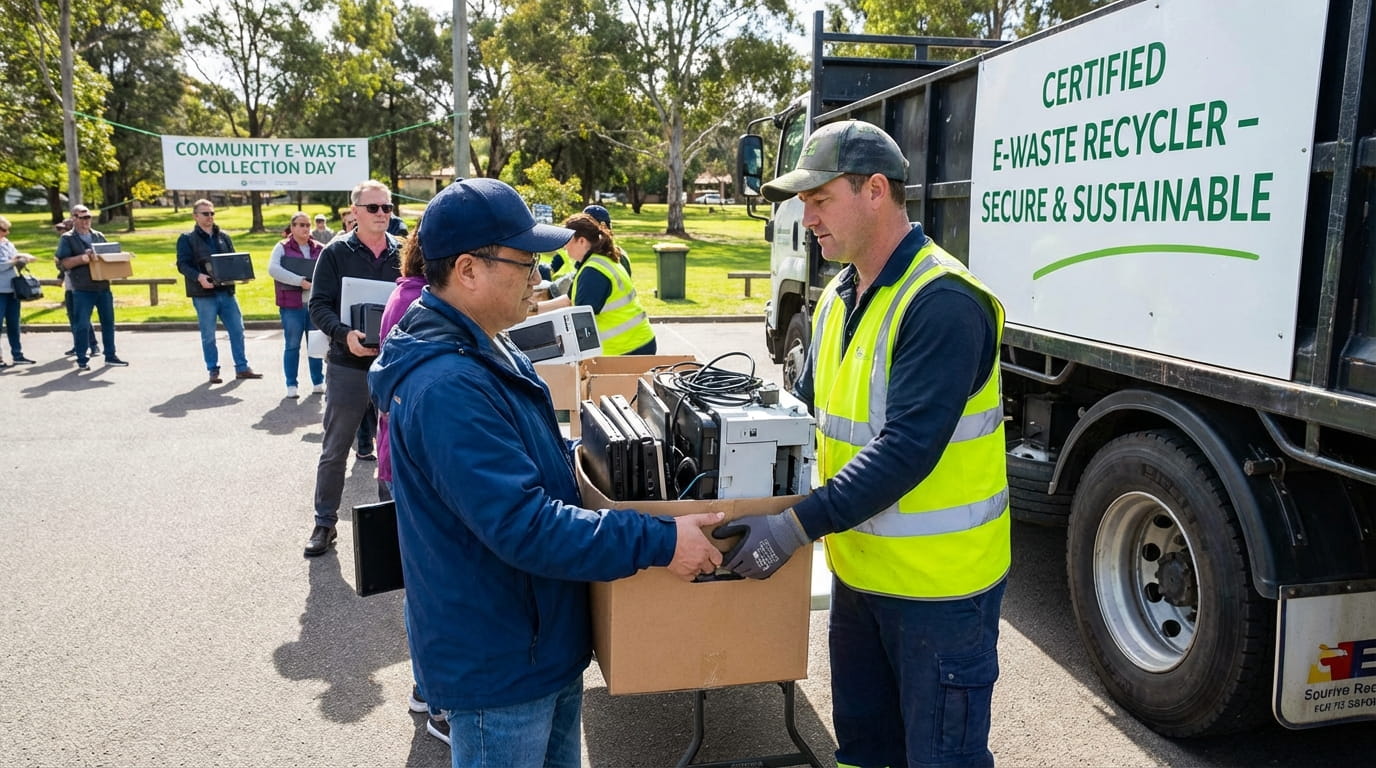
In today’s fast-paced corporate world, offices and companies regularly upgrade their electronic equipment, such as computers, laptops, printers, servers, and networking devices. As a result, a large amount of electronic waste (e-waste) is generated every year. Improper handling of this e-waste can cause serious environmental, legal, and data-security issues.
Handing over e-waste to an authorized e-waste recycler is not only an environmentally responsible decision but also a legal requirement in India.
What Is Corporate E-Waste?
Corporate or office e-waste includes:
- Computers, laptops, and servers
- Printers, scanners, and photocopy machines
- Routers, switches, and networking equipment
- Office phones and communication devices
- Batteries, cables, and electronic accessories
These items often contain hazardous substances as well as sensitive business data.
Legal Requirement Under Indian Law
As per the E-Waste (Management) Rules, 2022, offices, companies, and institutions fall under the category of bulk consumers. According to the rules:
- E-waste must be handed over only to authorized and registered e-waste recyclers or collectors
- Selling e-waste to informal scrap dealers is prohibited
- Companies must ensure environmentally sound recycling
Failure to comply can lead to penalties and legal action.
Environmental Responsibility of Companies
Improper disposal of office e-waste can lead to:
- Soil and groundwater contamination
- Air pollution from burning electronic components
- Harm to human health and wildlife
By handing over e-waste to authorized recyclers, companies help:
- Reduce environmental pollution
- Recover valuable resources
- Support sustainable waste management
Responsible recycling reflects a company’s commitment to environmental protection.
Data Security and Confidentiality
Office electronics often store sensitive information such as:
- Client and customer data
- Financial records
- Internal documents
- Login credentials and confidential files
Authorized e-waste recyclers follow secure data destruction processes, ensuring:
- Complete data wiping or physical destruction
- Protection against data theft and misuse
- Compliance with data security standards
This is a critical reason why companies should never dispose of e-waste informally.
Compliance with CSR and ESG Goals
Responsible e-waste recycling supports:
- Corporate Social Responsibility (CSR)
- Environmental, Social, and Governance (ESG) goals
- Sustainable business practices
Companies that follow proper e-waste disposal improve their brand image and stakeholder trust.
Financial and Operational Benefits
Working with authorized recyclers offers additional benefits:
- Proper documentation and compliance proof
- Transparent recycling process
- Reduced risk of penalties
- Organized and hassle-free disposal
In some cases, recyclers may also recover value from recyclable materials.
How Greentick Waste Management Helps Offices and Companies
Greentick Waste Management (GWM) provides professional e-waste collection and recycling services for offices and businesses. Our services include:
- Scheduled and bulk e-waste pickups
- Safe handling and transportation
- Handover to authorized recyclers
- Support for legal and environmental compliance
We make e-waste disposal simple, safe, and compliant for organizations of all sizes.
Conclusion
Handing over e-waste to an authorized recycler is not optional for offices and companies—it is a legal, environmental, and ethical responsibility. Proper e-waste management protects the environment, ensures data security, and keeps businesses compliant with Indian laws.
Choose responsible recycling. Partner with an authorized e-waste recycler.
Greentick Waste Management – Your Trusted Partner in Corporate E-Waste Disposal.





Leave a Reply